Artisans & Embroidery Traditions

The Artisans of Kutch

Kala Raksha Producer Company Limited represents a network of skilled craft artisans across Kutch district in Gujarat. The producer company brings together 465 artisan shareholders from 16 villages, representing diverse embroidery traditions that have been practiced for generations.

Embroidery in Kutch has historically been created by women as part of everyday life. It decorated garments, dowry textiles, and household objects, and served as a visual expression of cultural identity. Each community developed its own embroidery vocabulary of stitches, motifs, colors, and patterns.
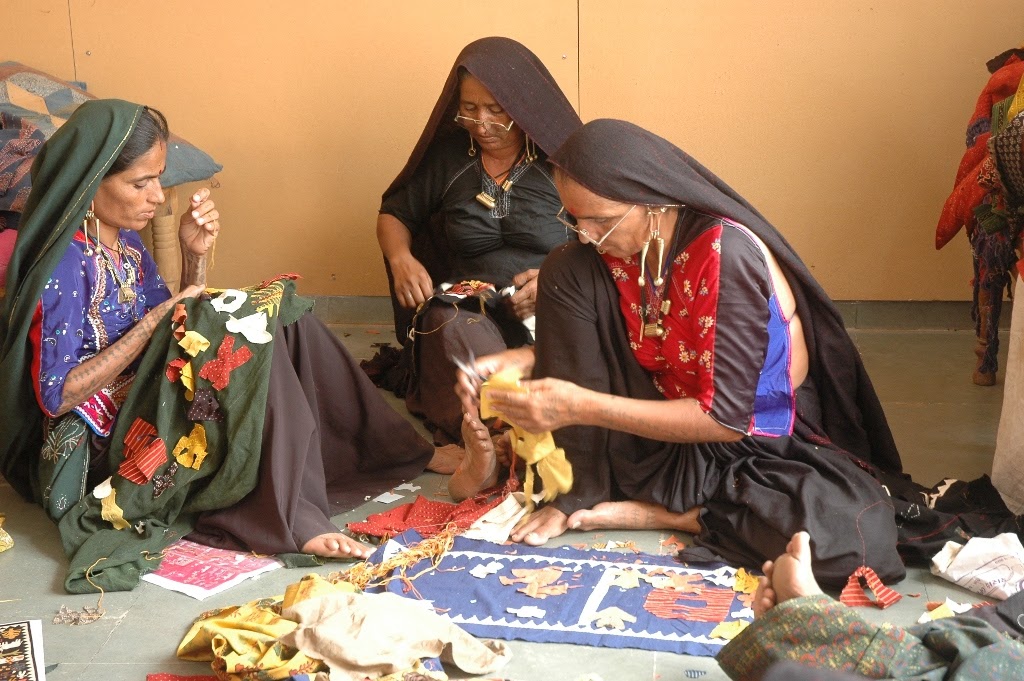
Artisan embroidering

Artisan Communities

The producer company works with artisans from several communities whose embroidery traditions form an essential part of Kutch's cultural heritage.

Rabari Marvada Sameja Maru Meghwal Garasia Jat Mutava

Embroidery Traditions of Kutch

Rabari Embroidery
Community: Rabari

Rabari Embroidery

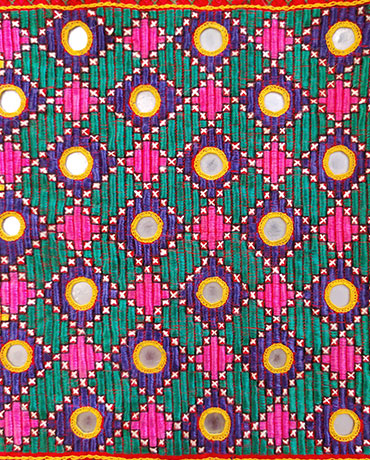
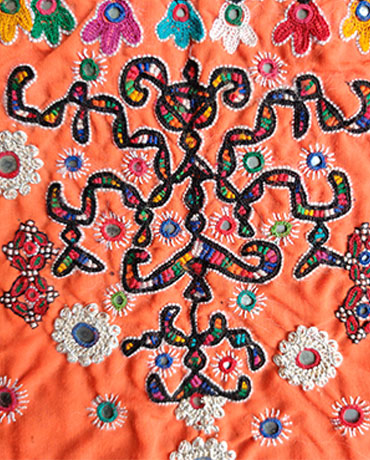
Rabari embroidery is unique to the nomadic Rabari community of Kutch. A defining characteristic is the use of mirrors in a variety of shapes. Artisans outline motifs using chain stitch and then decorate them with mirrors and accent stitches arranged in rhythmic sequences of color.

Rabari artisans also use a distinctive decorative back stitch known as bakhiya, which embellishes the seams of women's blouses and men's kediya jackets. The style continues to evolve as Rabari women interpret their changing world through bold abstract motifs and mirrored compositions.

Paako Embroidery
Communities: Marvada & Sameja

Paako Embroidery

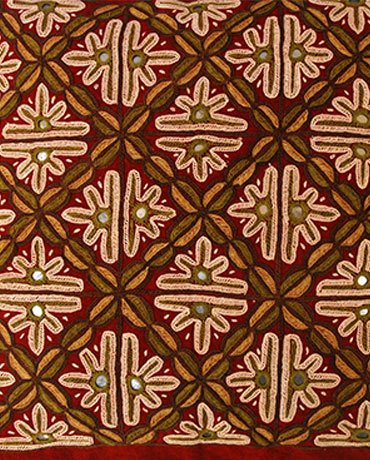
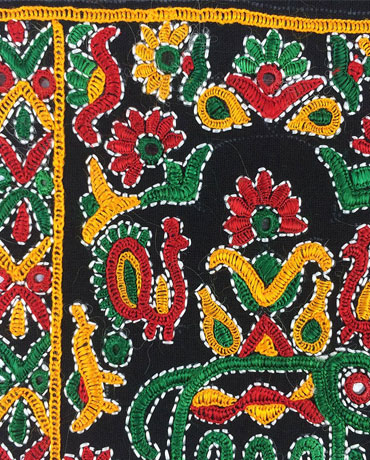
The word Paako literally means "solid." Paako embroidery is characterized by tight square chain stitch and double buttonhole stitches. Motifs are often outlined with black slanted satin stitches, creating strong graphic definition.

Designs are traditionally sketched lightly using mud and a needle before stitching. The motifs are typically floral and arranged in balanced symmetrical patterns. Among the communities associated with the producer company, Marvada and Sameja artisans practice Paako embroidery.

Jat Embroidery
Community: Garasia Jat

Jat Embroidery

Jat embroidery belongs to the Garasia Jat pastoralist community. Garasia Jat women stitch intricate geometric patterns using counted cross-stitch techniques. These designs are filled with minute mirrors and densely embroidered surfaces.

Traditionally the embroidery decorated the churi, a long gown worn by women. The style demonstrates a deep understanding of the structure of woven fabric and is unique to the regions of Kutch and Sindh.

Suf Embroidery
Community: Maru Meghwal

Suf Embroidery

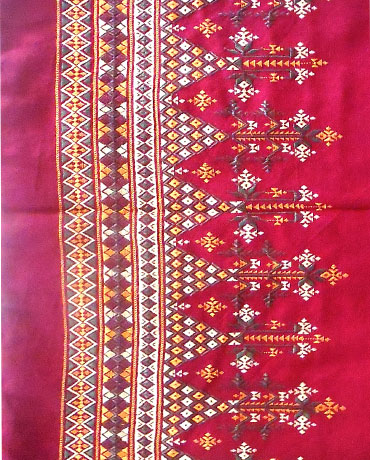
Suf embroidery is one of the most technically demanding embroidery traditions practiced in Kutch. The embroidery is based on a triangular unit called a suf. Artisans count the warp and weft threads of the cloth and work the embroidery from the back using satin stitch.

Motifs are never drawn on the fabric. Instead, the artisan visualizes the entire pattern and counts it out in reverse while stitching. Master artisans fill symmetrical compositions with intricate geometric detailing made from hundreds of tiny triangles.

Khaarek Embroidery
Community: Maru Meghwal

Khaarek Embroidery

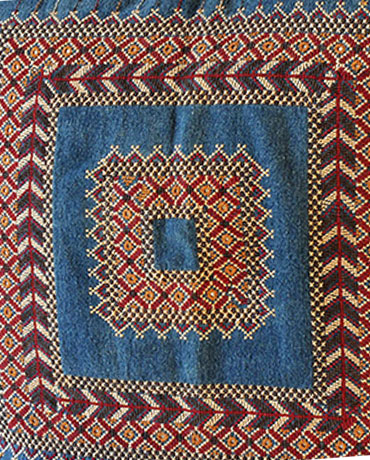
Khaarek embroidery is another counted geometric style practiced by Maru Meghwal artisans. In this technique the artisan first constructs geometric patterns using outlines of small black squares. The spaces between these outlines are then filled with bands of satin stitches worked along the warp and weft of the cloth.

The embroidery frequently covers the entire surface of the textile, producing striking geometric compositions. Older khaarek textiles also incorporated cross-stitch elements.

Mutava Embroidery
Community: Mutava

Mutava Embroidery

The Mutavas are a small pastoral Muslim community living in the Banni grasslands of northern Kutch. Mutava embroidery is recognized for its extremely fine and precise geometric work. The style includes miniature interpretations of several embroidery traditions including paako, khaarek, haramji, and Jat embroidery.

Certain motifs such as elongated hooked forms and delicate back stitch outlines are unique to Mutava work. Regardless of the technique used, Mutava embroidery is always characterized by exceptional fineness and precision.

Patchwork and Appliqué

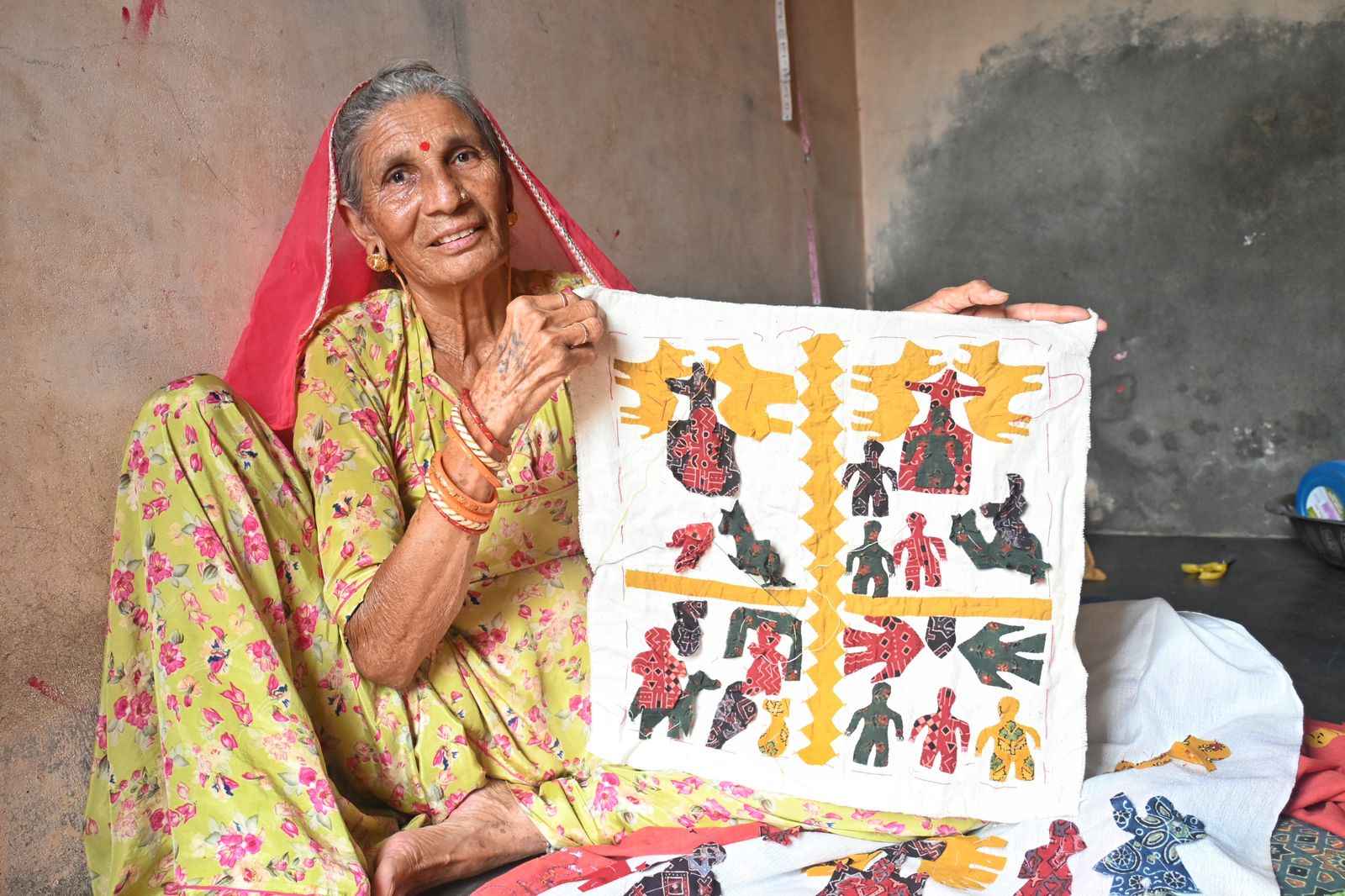
Patchwork and appliqué traditions are practiced among many communities of Kutch. Embroidery requires excellent eyesight, and as artisans grow older many gradually shift to patchwork work. Historically patchwork developed as a way to reuse old textiles and fabrics.

Recognizing this tradition, Kala Raksha introduced patchwork products soon after its founding so that older artisans could continue to participate in craft production. Today both elder patchwork artisans and younger embroiderers contribute to the work of the producer company.

Patchwork textiles

Women as Custodians of Cultural Heritage

Embroidery traditions in Kutch have always been maintained and transmitted by women. Through their work, women record stories of migration, identity, environment, and personal creativity. Each embroidered piece is unique, reflecting the imagination and skill of the artisan who created it.

By supporting these artisans through collective enterprise, Kala Raksha Producer Company helps ensure that the rich embroidery traditions of Kutch continue to evolve and remain relevant for future generations.

Kala Raksha Producer Company